
FAQs For DMX Lighting Console
What’s the difference between the ETC Eos, Ion Xe, and ColorSource console lines?
Eos is ETC’s flagship platform, built for large-scale productions with the highest channel counts, multi-user networking, and full effects/media server integration. Ion Xe offers most of Eos’s core programming features in a smaller footprint, suited to mid-size venues and touring. ColorSource is the entry-level line, designed for simpler productions and smaller venues that need reliable color-mixing control without the advanced programming depth of Eos or Ion.
How many DMX outputs/channels do I need for my venue or production?
It depends on your fixture count and channel-per-fixture requirements (a basic dimmer is 1 channel; an LED moving light can be 20+). As a rule of thumb, count your total fixtures, multiply by channels-per-fixture, and add headroom for future additions. Our team can help you size a console based on your current rig and growth plans.
What accessories (fader wings, flight cases, docking stations) work with each console model?
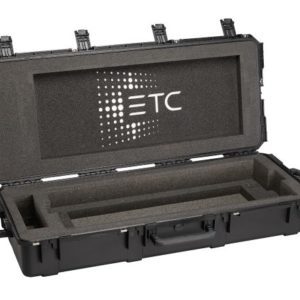
Fader wings and docking stations are generally model-specific — an Ion Xe fader wing won’t dock to an Eos console, for example. Flight cases are typically sized per console model to ensure a proper fit for touring and storage. Check the compatibility list on each product page, or ask our team to confirm the right accessories for your specific console.
Can you help size a console for a touring production vs. a fixed installation?
Yes. Touring productions typically prioritize smaller footprint, ruggedized cases, and simplified networking for quick load-in/out, while fixed installations can support larger consoles with permanent networking and expansion. We can help you weigh those tradeoffs based on your show’s needs.